Pest Control: Valuable Approaches to Guard Your Dwelling and Venture
Pest Control: Effective Techniques to Guard Your Residence and Organization
Beginning to Pest Control
Pest Control involves the administration or handling of species defined as pests – organisms that unfavorably impact individual's activities or surroundings. In New Jersey, in which different natural systems meet suburban and urban advancement, potent Pest Control is not simply a extravagance but a necessity for upholding wholesome home and vocational spaces. From the widespread districts of Monmouth County to the integrated residential areas of Matawan, pest problems can influence anyone, no matter of how spotless or adequately preserved their property may be.
The relevance of using efficient Pest Control plans should not be overstated. For residents, pests can damage architectural solidity, adulterate food provisions, and create important health perils. Companies encounter these equivalent difficulties, with the further worry of prestige harm and prospective deficit of customers if outbreaks are discovered. Typical pests in New Jersey encompass vermin like rats and mice, diverse invertebrates such as ants, cockroaches, and bed bugs, and the particularly destructive termites that can silently undermine a building's support structure.
The Rationale Pest Control Is Crucial
Health Dangers of Pest Control Chemicals
A lot of pests transmit and transfer diseases that can trouble individuals and pets. Rodents are identified hosts of hantavirus, salmonella, and leptospirosis. Cockroaches can initiate asthma flare-ups and hypersensitive effects, particularly in young ones. Ticks, common in New Jersey's sylvan zones, are distinguished for distributing Lyme disease, while mosquitoes can transmit West Nile virus and Eastern Equine Encephalitis. Skilled Pest Control enables diminish these health perils by exterminating the basis of these likely disease carriers.
Building Damage in Pest Control
The architectural destruction caused by pests can be extensive and costly. Termites alone create over $5 billion in structure injury per year around the United States, with New Jersey homes being specifically open due to the state's climate. Small mammals can gnaw through electronic cords, creating fire threats, while their continuous gnawing can injure insulation, pipes, and wooden framework parts. Even relatively harmless ants can impair wood structures if allowed untreated, specifically carpenter ants which are common in Monmouth County.
Pecuniary Results of Pest Control Services
Avoiding pest infestations can result in significant financial effects. What potentially commence as a slight problem demanding basic handling can swiftly increase into a major issue calling for extensive correction. For firms, notably those in the food business or leisure sectors, pest invasions can lead to inadequate health assessments, short-term shutdowns, and permanent injury to status and customer confidence. Allocating resources in standard Pest Control is not solely about immediate satisfaction—it's a prolonged financial protection.
Pest Control: Typical Residential and Firm Pests
Small Mammals (Rats and Mice)
When it regards spotting rodent problems in your New Jersey home, awareness is critical. You perhaps notice droppings near food sources, in containers, or underneath sinks. Nibble marks on food containers, wood, and electrical cables are telltale marks of their being. At evening, you may perceive abrasive commotion in partitions, overhead surfaces, or under floors as these evening critters get energetic. If you identify habitats formed from torn documents, fibers, or arid plant substance, that's a distinct symptom rodents have built themselves settled. Slick rub marks across baseboards and surfaces appear as rodents adopt the equivalent paths frequently, while your pets may exhibit atypical manner such as woofing or clawing at places under machines or furniture where rodents seek refuge.
Vermin in New Jersey homes and firms constitute numerous hazards above simple bother. They can contaminate food and cooking areas with pathogens present in their pee and stools. Their constant requirement to gnaw can damage belongings, notably wiring, which forms fire threats. In Matawan and neighboring vicinities, the Norway rat and house mouse are particularly challenging, prospering in both metropolitan and residential settings. Powerful Pest Control approaches are necessary to take care of these destructive intruders.
Creepy Crawlies (Ants, Cockroaches, Bed Bugs)
Invertebrate issues manifest themselves in diverse means contingent on the classification. Ant troubles evolve into clear when you witness noticeable ant tracks directing to food stocks, or when you find little accumulations of soil or wood particles formed by carpenter ants. Cockroach infestations often show themselves through dark droppings reminiscent of coffee grounds or black pepper, a unique stale scent that suffuses invaded areas, and the existence of egg capsules in obscured corners. Bed bug issues manifest as rust-colored marks on mattresses and belongings, shed skins near sleeping locations, diminutive blood marks on sheets, and bothersome red welts on skin usually ordered in a row or assembly.
Arthropods typify the most diverse variety of pests in New Jersey. Cockroaches can cause asthma and sensitivities while distributing countless microorganisms. Bed bugs, while not disease transmitters, create notable pain, sleep disturbance, and psychological torment. Some ant species, like carpenter ants common in Monmouth County's sylvan areas, can generate constructional deterioration akin to termites across time. Professional Pest Control companies can detect precise insect types and apply precise handling strategies that deal with the distinctive practices and fragilities of each pest.
Termites
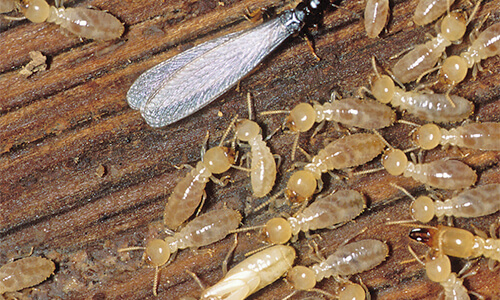
Spotting termite existence promptly calls for being aware of the faint symptoms of their being. You may spot abandoned wings near casements and portals after swarmers have discovered a mate and established a new colony. Mud tubes on outer partitions, lumber beams, or in crawl regions serve as protected highways for these ruinous critters. Wood that sounds hollow when patted shows termites have been feeding from within. Doors and apertures that quickly bond may signal contorting from termite impairment, while cracked or swelling paint resembling water injury often covers termite movement underneath. Discovering frass—termite dung comparable to minute wood-colored bits—provides another evidence of their objectionable attendance.
Termites establish perhaps the most noteworthy framework risk between all usual pests. In New Jersey, the Eastern subterranean termite is pervasive and specifically ruinous. These creatures can persist unsensed for seasons while inflicting extensive impairment to wood foundational elements. Homes in Matawan and throughout all of Monmouth County, particularly older houses, are vulnerable to termite invasions. The typical price of term pest control.
Pest Control Security Considerations
Secure Application of Products and Substances in Pest Control
When chemicals become required in your pest control strategy, prioritizing protection demands focus to multiple critical approaches that safeguard individuals, pets, and the surroundings. Continuously study and adhere to product instructions exactly, as these legal guidelines reflect thorough evaluation and official review designed to decrease hazards. Employ the minimum successful volume of product to reach elimination while decreasing unnecessary product introduction into your home environment. Apply products only in areas specified on the label, avoiding off-label uses that may generate unforeseen risks or decrease effectiveness. Don suitable safety gear as designated by product companies to eliminate individual interaction during use. House products in their factory packages with directions intact to preserve entry to safety details and prevent misidentification. Maintain comprehensive logs of all applications, noting chemicals utilized, mixing ratios, areas treated, and schedules of use for subsequent consultation. Enable sufficient drying and airflow before reentering treated locations, particularly crucial in New Jersey's climate where humidity can influence setting durations. Think about reduced-risk choices when efficient, as developments in pest elimination have generated many safer choices that keep efficacy while minimizing likely hazards.
Safeguarding Animals and Kids While performing Pest Control Applications
Specific precautions grow essential when executing pest control treatments in residences with at-risk household members. Remove pets during application and until areas are set to stop direct contact with damp products or fumes that could cause harmful reactions. Cover or move pet nutrition, drinking bowls, and playthings before application to eliminate contamination that could result in accidental eating. Place children's items apart from service areas, especially things that young kids might put in their lips. Sanitize and sanitize food making counters after service, even if they weren't specifically serviced, to get rid of any residues that might have gathered during treatment. Ensure children distant from applied areas for the suggested duration, prolonging this time for crawling toddlers who have greater immediate contact with surfaces and low spaces. Examine pet-safe and kid-friendly chemical choices when available, as many modern products target specific pest biology while limiting human poison. Most crucially, notify qualified specialists about the presence of animals, young ones, or pregnant household occupants before they formulate service approaches, enabling them to adapt strategies and product options appropriately.
Governmental Rules and Compliance with Pest Control
Pest control in New Jersey operates within a legal structure created to protect community wellness and the surroundings while ensuring successful pest control. The New Jersey Department of Environmental Protection oversees pest management procedures, necessitating qualified pest control firms to fulfill specific standards. Companies must utilize qualified professionals who have succeeded in government assessments showing competency in pest biology, application approaches, and safety guidelines. These companies must copyright correct protection coverage protecting both their professionals and their patrons from possible harm or injuries connected with pest elimination activities. Rigid guidelines govern chemical storage, shipping, and discarding to avoid environmental contamination and illegal entry. Experts must offer Safety Data Sheets upon demand, detailing the attributes and hazards of substances employed in applications. Alert requirements apply for some uses, especially in apartment residences or commercial areas with several residents. Detailed service documentation must be preserved, building an review path of pest control activities. Additionally, only chemicals approved for application in New Jersey may be legally utilized, making certain that regional environmental situations and environments have been considered in the authorization procedure. For business properties in Matawan and throughout Monmouth County, extra rules may pertain based on the industry, especially for dining business, healthcare, and childcare buildings where pest management intersects with additional public safety concerns.
Eco-Friendly Pest Control Alternatives
Combined Pest Control (IPM) Strategy
Unified Pest Management embodies the top measure in contemporary pest control, centering on lasting avoidance through a combination of methods that reduce environmental impact while optimizing effectiveness. The IPM method commences with thorough inspection and surveillance to identify pest activity correctly, establishing starting facts about kinds existing and population levels. This produces accurate identification of pest varieties, guaranteeing management efforts target specific actions and vulnerabilities rather than implementing broad methods. Practitioners set level amounts that require action, acknowledging that the plain existence of a small number of pests doesn't necessarily call for action if numbers continue below damaging levels. When treatment becomes needed, IPM employs several control strategies in combination, commonly beginning with minimal-risk strategies and advancing only when necessary. During the system, specialists assess effectiveness and adjust approaches as needed, creating a responsive method flexible to changing situations. Most significantly, IPM emphasizes prevention over treatment, addressing construction and environmental aspects that sustain pest populations rather than merely eliminating existing insects. Many pest control organizations in New Jersey offer IPM-based treatments that align with the state's push toward reduced-risk pest control procedures, particularly in critical settings like schools, healthcare facilities, and meal processing operations.
Natural Treatment Methods
Effective pest control often integrates alternative approaches that can address or reduce pest concerns without introducing substances into the surroundings. Mechanical barriers such as filters, door sweeps, and filling prevent pest penetration completely, handling the problem at its origin. Direct controls like catches and barrier systems remove existing creatures while blocking further infestations. Natural methods involving beneficial creatures and organisms introduce biological opponents that target individual creatures while leaving useful creatures safe. Behavioral approaches adjust the setting to deter pests, such as modifying watering patterns to decrease moisture that draws some creatures. Area adjustment minimizes hiding places and sustenance options, making areas minimally welcoming to troublesome inhabitants. For specific insects like bed bugs, thermal processes offer extremely effective management without chemical leftovers by boosting heat past the temperature lethal threshold for all life cycles of the specific pest. Comparably, refrigeration procedures for stored product pests like food beetles or pantry moths can eradicate infestations in food products without harmful exposure. These approaches demonstrate notably useful in New Jersey's mixed locations, where closeness to water bodies, protected wild areas, and dense residential hubs produces many situations where chemical reduction turns desirable or necessary.
Green Pest Control Treatment Methods
The pest control sector maintains to develop toward more sustainable procedures that retain efficiency while reducing surrounding influence. Organic insecticides derived from plant substances like chrysanthemum extract, neem oil, and concentrated compounds provide specific management with decreased duration in the nature. Living treatments featuring microorganisms, fungi, or agents that focus on certain pest species supply precision that traditional general products are unable to equal. Maturation controllers that block pest reproduction by blocking with developmental phases deliver long-term number control without instant harmful influences on mature insects. Chemical traps that track or disturb pest pairing assist establish when treatment turns essential and can avoid mating in particular types. The sector continuously uses lower-risk substances with small ecological influence, moving away from traditional products with more extensive influences on non-target creatures. Precision usage equipment that reduce total chemical use apply applications directly where required rather than scattering products throughout extensive areas. Green certification initiatives for pest management organizations set standards for environmentally preferable assistance and provide users with clear labeling of services devoted to sustainable practices. In naturally vulnerable regions of New Jersey, containing areas of Monmouth County with proximity to liquid bodies, these eco-conscious strategies are notably useful for protecting both personal health and natural systems while yet supplying effective pest management.
Finding a Local Pest Control Service Provider in New Jersey
Capitol Exterminating System
272 NJ-34
Matawan, NJ 07747
(732) 441-1900
Commonly Asked Queries (FAQs) about Pest Control
How regularly should pest control be done?
For the majority of New Jersey houses, every three months pest control offers adequate protection against periodic pest challenges. This timing corresponds with the area's different seasons, each bringing distinct pest problems that demand protective focus. Spring applications commonly deal with appearing ant populations and dormant organisms getting mobile. Warm season applications center on mosquitoes, parasites, and different airborne bugs that thrive in hotter temperatures. Autumn procedures prepare homes for mice and rats and overwintering pests searching for refuge as conditions fall. Winter applications keep defense against internal insects while tackling small mammal pressure at its maximum. However, this rate may grow for properties with particular danger conditions or persistent issues that require increased intensive management. Properties near forested regions in Monmouth County may benefit from further tick and mosquito procedures across peak seasons. Properties with record of certain pest issues often require directed secondary treatments beyond the normal seasonal schedule. Corporate facilities, especially dining service businesses in locations like Matawan, often require regular service to preserve conformity read more with health rules and eliminate problems that could hurt reputation and commercial processes.
Is professional pest control harmless for pets?
When conducted appropriately, expert pest control can be protected for companions through thoughtful substance picking and employment approaches that decrease contact. Contemporary specific employment techniques and reduced-risk chemicals have markedly upgraded protection features relative to previous pest treatment strategies. Recent treatments regularly employ products particularly developed to have limited harm to animals while continuing successful against specific insects with separate anatomies. Professional professionals get instruction in application methods that place chemicals in locations pets can't enter, such as structural spaces, openings and gaps, or behind appliances. However, pets should be relocated during application and until all treatments have dried fully, obeying individual delay durations suggested by the substance maker and professional. Water tanks should be protected and air devices disabled throughout service to eliminate contamination from aerial particles. Pet items featuring resting places, items, and eating bowls should be moved or covered during service. Talk about any worries with your pest control specialist, who can advise correct rest periods depending on the certain treatments utilized and adjust methods for residences with particularly vulnerable animals like birds or reptiles that may have distinct physiological vulnerabilities than cats and canines.
What are the symptoms of a significant pest issue?
Past visible insects personally, various alert signals reveal possibly significant infestations needing quick pest control response. Unusual scents frequently develop with significant problems – musty, fatty aromas may indicate rodents, while pleasant, almond-like smells occasionally accompany German insect communities. Unknown building damage like sinking floors, peeling finish, or falling apart lumber may expose termite infestation or wood-boring ant infestations harming construction components. Peculiar noises within walls or roof areas, especially at dark, frequently show small mammal activity as these dark-active creatures get lively in concealed spaces. Excessive debris appearing as small shavings close to timber elements may truly be frass or feces from wood-destroying creatures. Some families encounter mysterious wellness issues like respiratory troubles or scratching that resolve when distant from residence, possibly revealing creature infestations influencing inside environmental quality. In New Jersey residences, special attention should be given to cellar and lower locations where moisture issues can sustain pest colonies, notably in aged homes throughout Monmouth County where structural splits and decaying binding provide many penetration locations. Locating several expired creatures of the matching kind shows a more extensive population close, while grease stains along baseboards reveal set small mammal passages with ongoing use.
Can I prevent insects without pest control products?
Absolutely, various creatures can be eliminated through appropriate sanitation, prevention, and environment alteration without using pesticide treatments. The foundation of natural pest control initiates with complete prevention procedures – filling cracks, holes, and access points that let organisms to enter structures in the initial position. Putting in entrance seals, fixing damaged screens, and filling utility holes stops frequent penetration spots. Eliminating food supplies through correct food containment in closed vessels, immediate elimination of messes and pieces, and consistent refuse removal markedly lowers draws that bring organisms into homes. Decreasing humidity by mending seeping pipes, bettering airflow in humid zones, and handling runoff troubles gets rid of the water origins many creatures call for. Preserving a distance area encircling buildings by cutting vegetation, removing plant debris, and storing timber raised and apart from homes decreases harborage areas and entry locations. Employing physical shields like copper material or iron fiber to seal wider openings supplies lasting blocking for small mammals and large mice. Consistent maintenance that contains suction cleaning fissures and spaces takes away creature offspring and food waste that sustain pest reproduction. For present infestations, nevertheless, some type of elimination material may be necessary to address set problems, though many minimal-impact options are obtainable containing diatomaceous powder, boron powder, and pest-killing detergents that provide lowered hazard relative to conventional pesticides.
What should I look forward to while having professional pest control treatment?
A expert pest control treatment usually initiates with a comprehensive inspection to determine pest species, invasion locations, and favorable circumstances relating to the problem. The expert should spend time examining both inside and exterior spaces, paying specific care to food preparation areas, bathing facilities, cellars, and boundary bases where pest activity commonly accumulates. Following this assessment, the expert should explain their observations in detail and propose a application approach tailored to your specific case, addressing both the target organisms and the techniques planned for controlling them. You may be given preparation steps before treatment, potentially including shifting belongings, cleaning certain areas, or protecting pets. During the treatment, the specialist will use appropriate substances to designated areas depending on the pest types recognized, centering on openings, openings, and pest harborage zones rather than distributing procedures around full surfaces. They may position observation tools like pest snares or food stations that help monitor improvement and provide ongoing protection. After concluding services, a qualified person should clarify any after-service safety measures such as ventilation requirements, return times, or spaces to wipe. Before going, they should plan additional visits if required for specifically persistent insects like bed bugs or German cockroaches that commonly need multiple treatments for total removal. Throughout this process, experts should invite inquiries and offer clear facts about the substances and approaches used, showing their preparation and commitment to both success and wellness.
Productive pest control is an crucial aspect of preserving sanitary, harmless living and working spaces in New Jersey. From the humid summers that produce mosquitoes and parasites to the chilly times when mice and rats seek protection inside, pest challenges persist a ongoing concern for homeowners and enterprises in Monmouth County and Matawan. By grasping frequent creatures, implementing proactive actions, and recognizing when to seek qualified support, structure operators can shield their holdings and the health of tenants.
Adopting a preventive approach to pest control is always greater successful and economical than reacting to active problems. Frequent examinations, correct upkeep, and handling small problems before they expand can avoid the substantial costs and disturbances related with serious pest concerns. When specialist assistance grows required, picking a reputable, qualified pest control company who utilizes integrated pest management approaches guarantees efficient outcomes with reduced surrounding effect.